

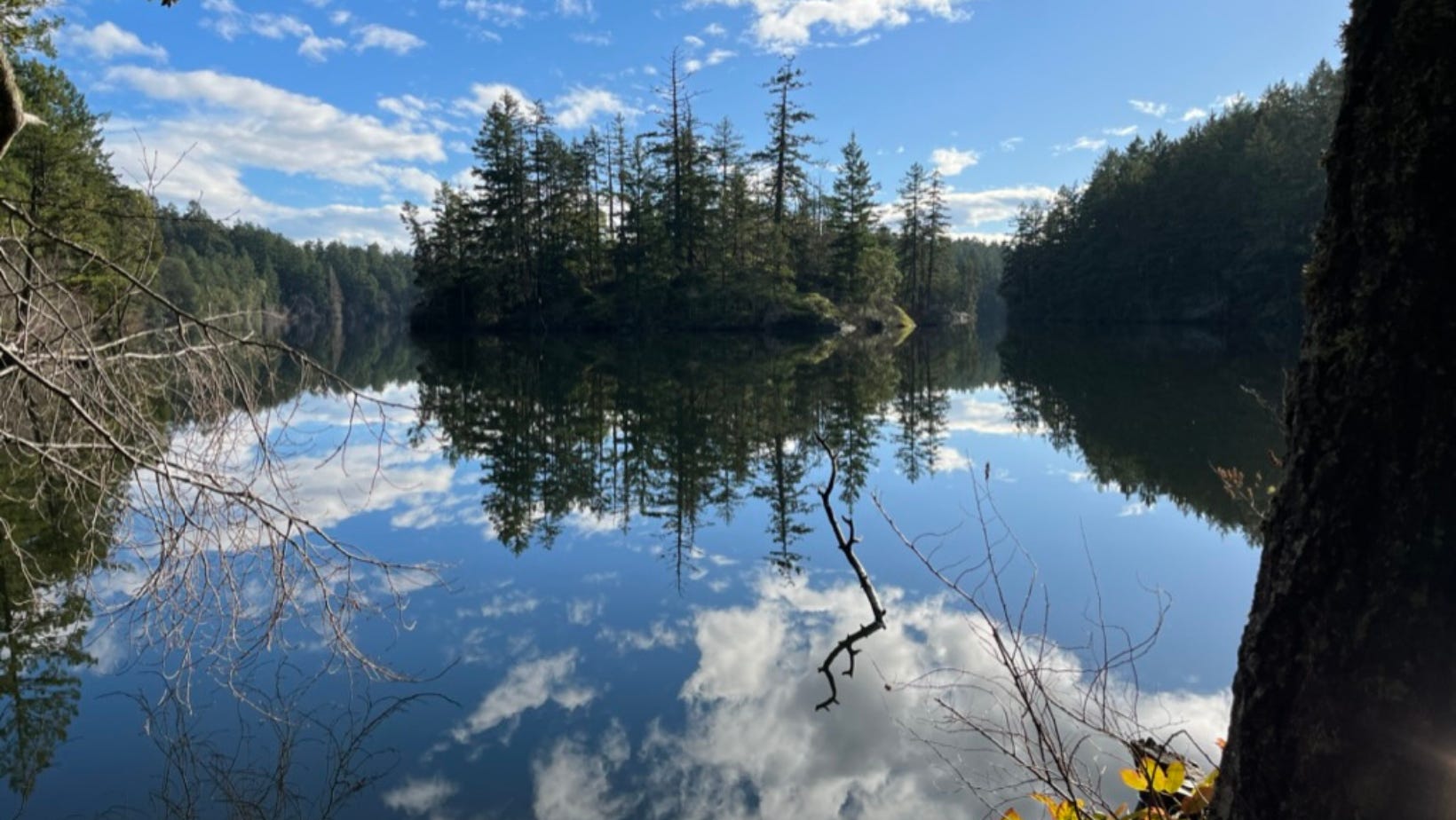
I’ve lived in my neighbourhood for four years. I know the walk around the lake by heart, every bend, every bench, every single dog and even some humans. I thought I knew all of it, blindfolded.
But tonight, I was feeling a little melancholy, and decided I needed to explore a new route. (If you do what you always did, you get what you always got.)
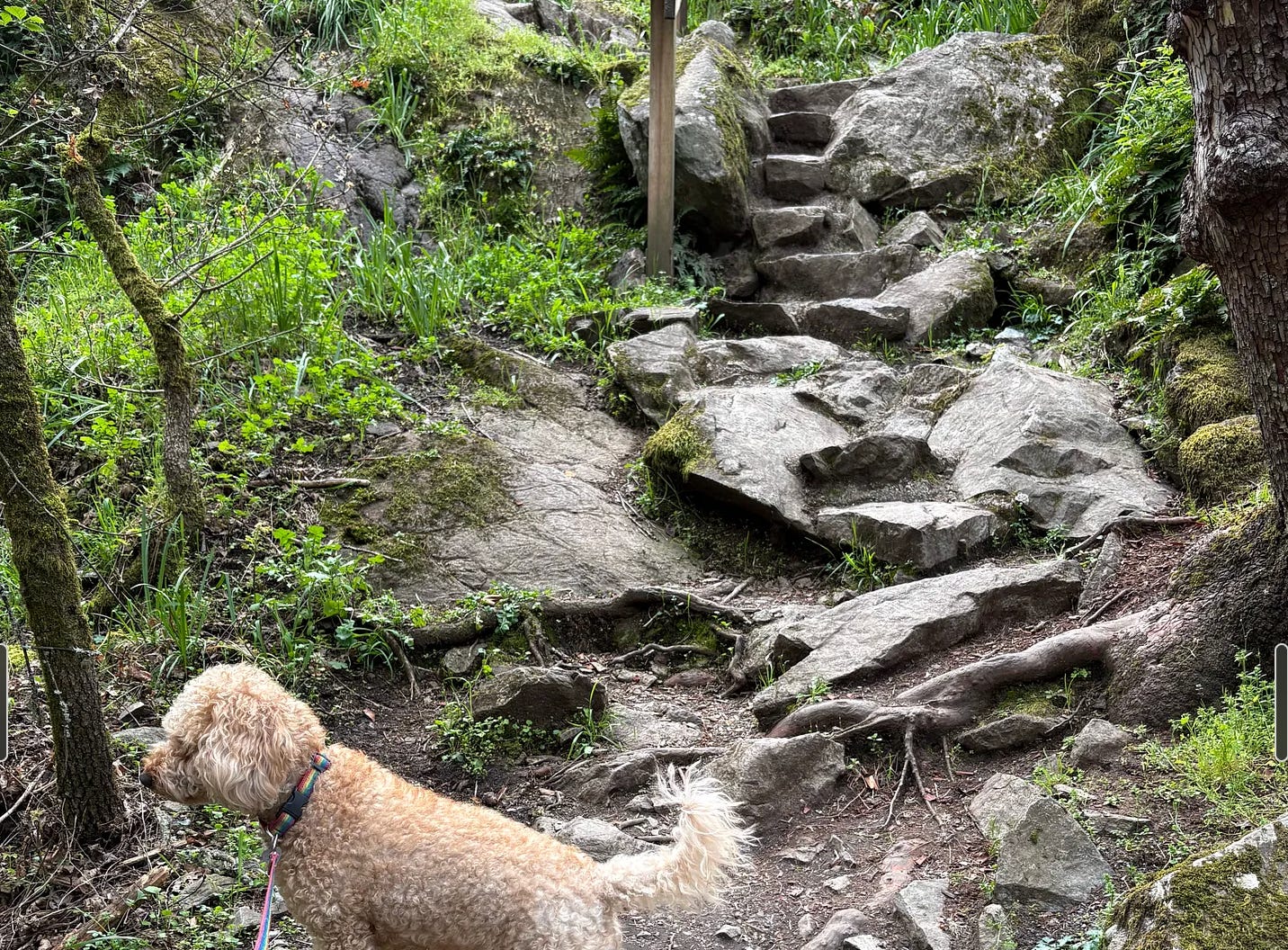
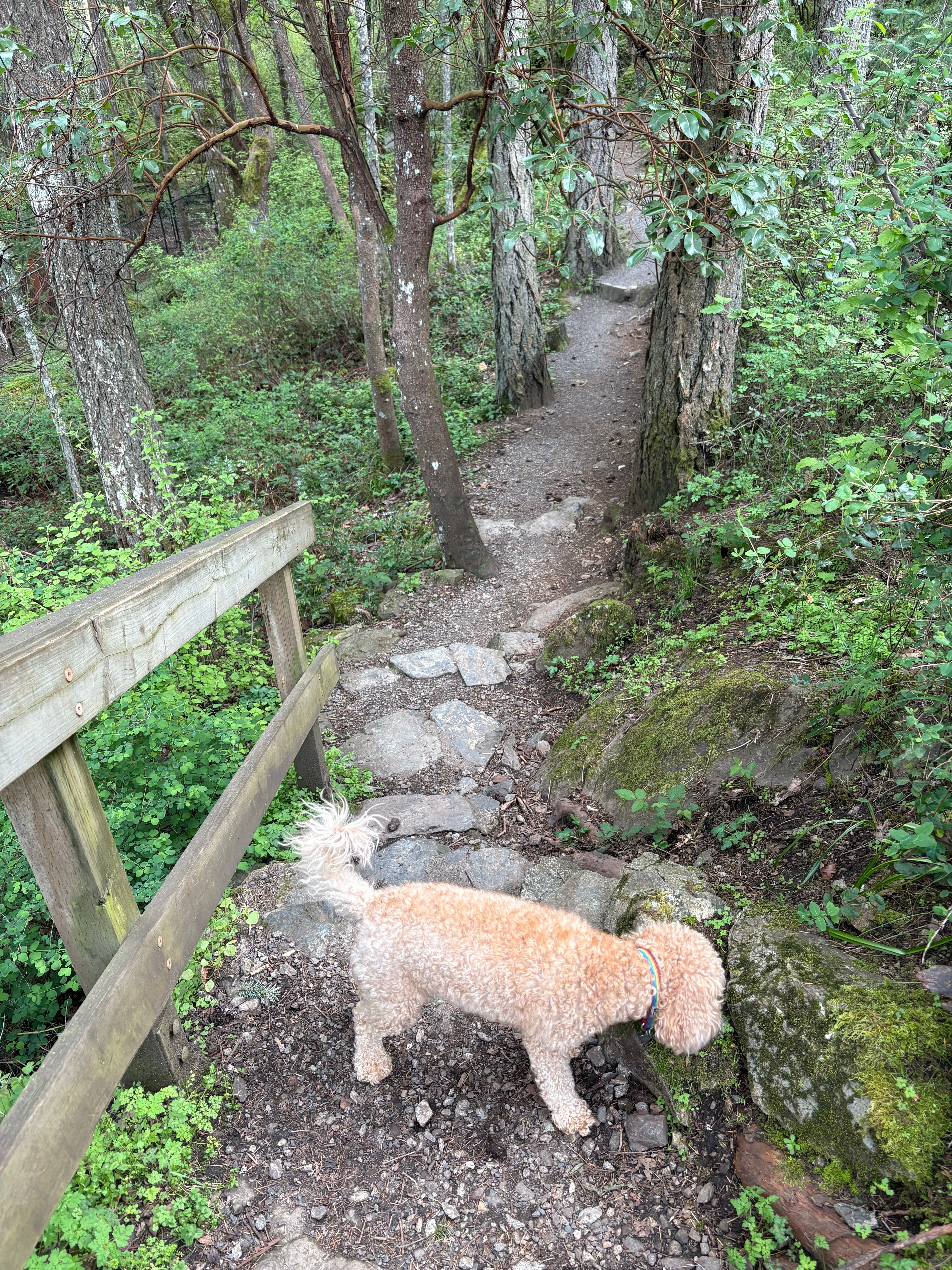
I found a path I’d never seen before. It climbed up through the trees and opened onto wild, unhurried terrain, rocky outcrops, wind-bent arbutus, and then suddenly: vistas I didn’t know existed. Camas flowers everywhere, that particular blue-purple that only happens in spring, pushing up through the grass like a quiet insistence on beauty.
Four years. And the path was there the whole time.
Spring does this. It finds the gaps.
There’s something about this season that refuses to be argued with. The camas doesn’t wait for permission. The light doesn’t apologise for arriving earlier. Things that were frozen or dormant or hidden simply begin, with or without us, in whatever direction finds the sun.
I’ve been thinking about new paths. Not just the literal one up the mountain, but the ones we find, or refuse to see, in our own lives.
There’s a particular kind of stuck that’s hard to see from the inside.
It looks like hope. It feels like love. It has the texture of something almost working, always almost working, and so you stay. You wait. You check your phone. You try again. You make yourself a little smaller, a little more accommodating, a little more willing to accept less than you need because less is what’s being offered and at least it’s something.
The psychological term for it is intermittent reinforcement, the same mechanism behind slot machines. When connection is sometimes there and sometimes not, when warmth is unpredictable, when you never quite know what you’re going to get , your brain releases a bigger reward signal when the good thing finally arrives. You become more attached, not less. More hooked, not freed.
For those of us with ADHD brains, this is even more pronounced. We are already wired to chase dopamine, already drawn to novelty and unpredictability, already prone to find the stable and consistent somehow flat by comparison. An unavailable person is, neurologically speaking, a perfect storm. The uncertainty doesn't register as a warning sign, it registers as excitement. The chaos doesn't repel us, it keeps us engaged. Our own nervous system becomes the thing working against us.
Crumbs feel like a meal when you’re hungry enough.
But they’re not a meal. And hunger is not the same as love.
The hardest part isn’t recognising the pattern. Most of us can see it clearly enough, at least in our better moments. I know this isn’t good for me. We say it to ourselves, and we mean it, and then we check the phone again.
The hard part is that knowing isn’t enough.
Because the pull isn’t intellectual. it lives in the body. In the nervous system. In years of conditioning that taught us to equate anxiety with aliveness, uncertainty with passion, waiting with love.
When someone is consistently kind and present and available, it can feel almost boring. Too easy. Not quite right. Where’s the charge? Where’s the uncertainty that used to feel like chemistry?
That charge, it turns out, was just stress. The chemistry was cortisol. The passion was a nervous system in survival mode, doing its best to call itself love.
A lot of what we call love isn’t love at all.
It’s longing. It’s projection. It’s the hope that this person will eventually become the person we need them to be.
We don’t need them to admit it. The pattern is the answer.
And here is the other thing no one tells you about leaving a pattern that isn’t working: you will grieve it. Even when you know it was costing you everything. Even when you can see clearly that you were contorting yourself into shapes that didn’t fit, hoping the contortion would eventually feel natural. You will still feel the absence of it like a missing tooth your tongue keeps finding.
That’s not weakness. That’s just what it costs to have cared.I’ve been thinking about what we make room for when we stop waiting.
When the constant low hum of hope and anxiety finally goes quiet, the checking, the analysing, the interpreting of silences, there is at first just emptiness. It can feel like loss even when it’s freedom.
But emptiness is also space. And space is where new things grow.
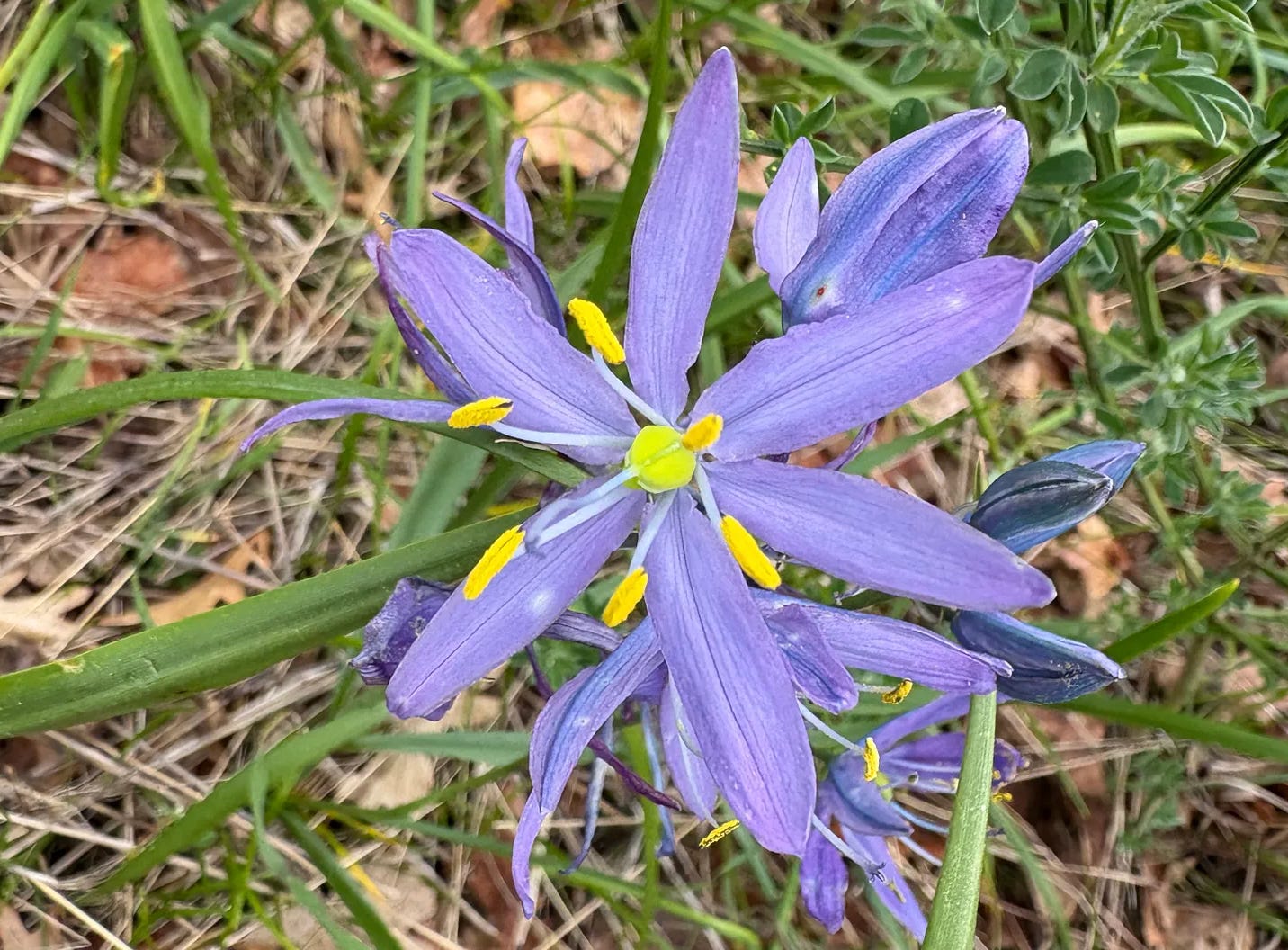
Like camas flowers on a hillside you never knew was there. Like a path up a mountain that’s been waiting four years for you to find it.
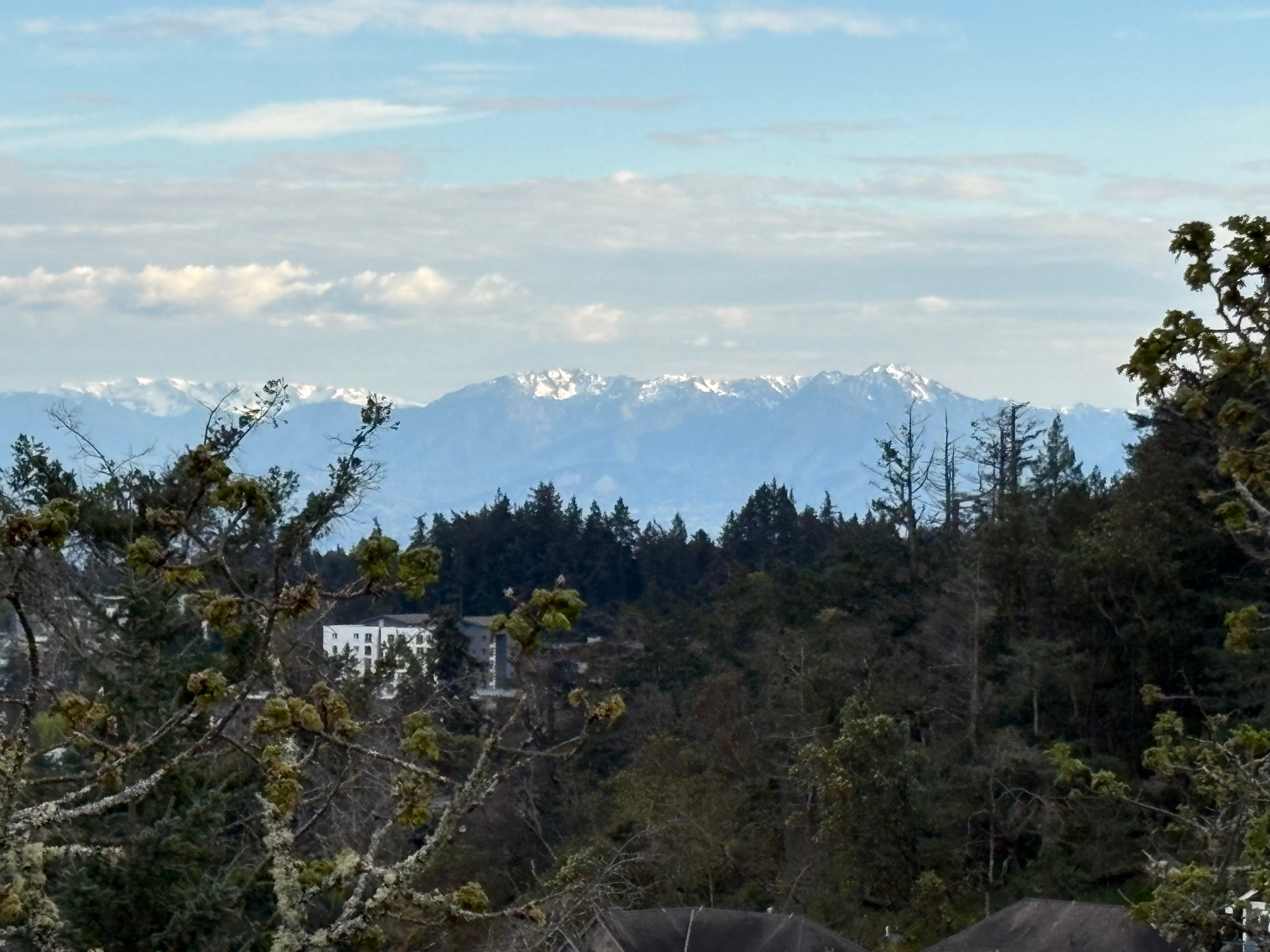
The choices that change things are rarely dramatic. They don’t announce themselves. They look like small, quiet decisions made on ordinary evenings.
Deciding not to send the text. Deciding to take the unfamiliar turn. Deciding that what you would give to the right person, you also deserve to receive.
Moving heaven and earth, not one person sacrificing everything while the other stays comfortable, but both people willing. Both people choosing. Both people showing up.
That’s not too much to ask. That’s exactly enough.
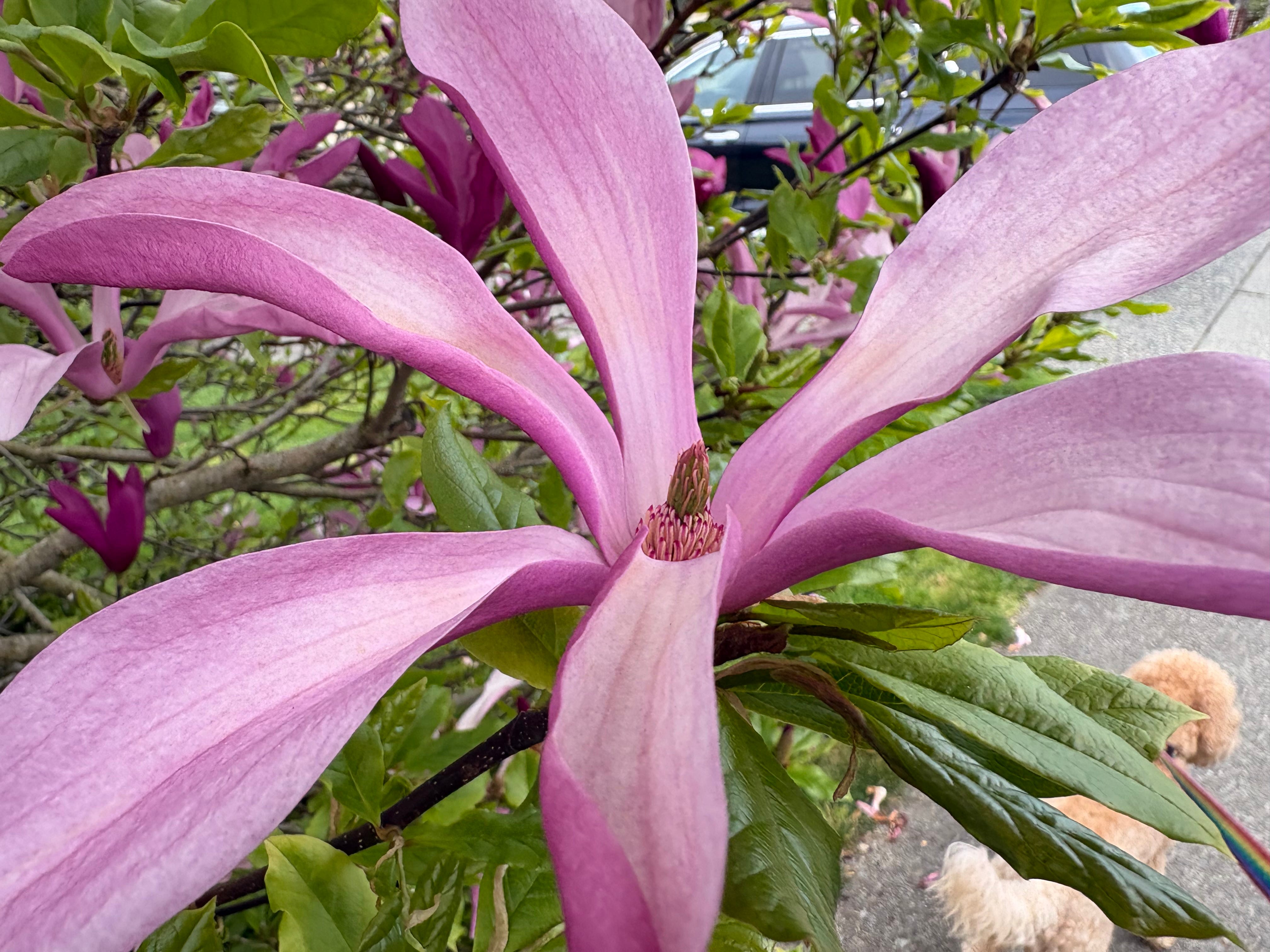
Spring doesn’t wait to be ready. It just begins, in whatever direction finds the light.
I think about the flowers, how they just open, faithfully, every year, on hillsides that may go unseen for seasons at a time.
And then one evening someone takes an unfamiliar path, climbs a little higher than usual, and finds them.
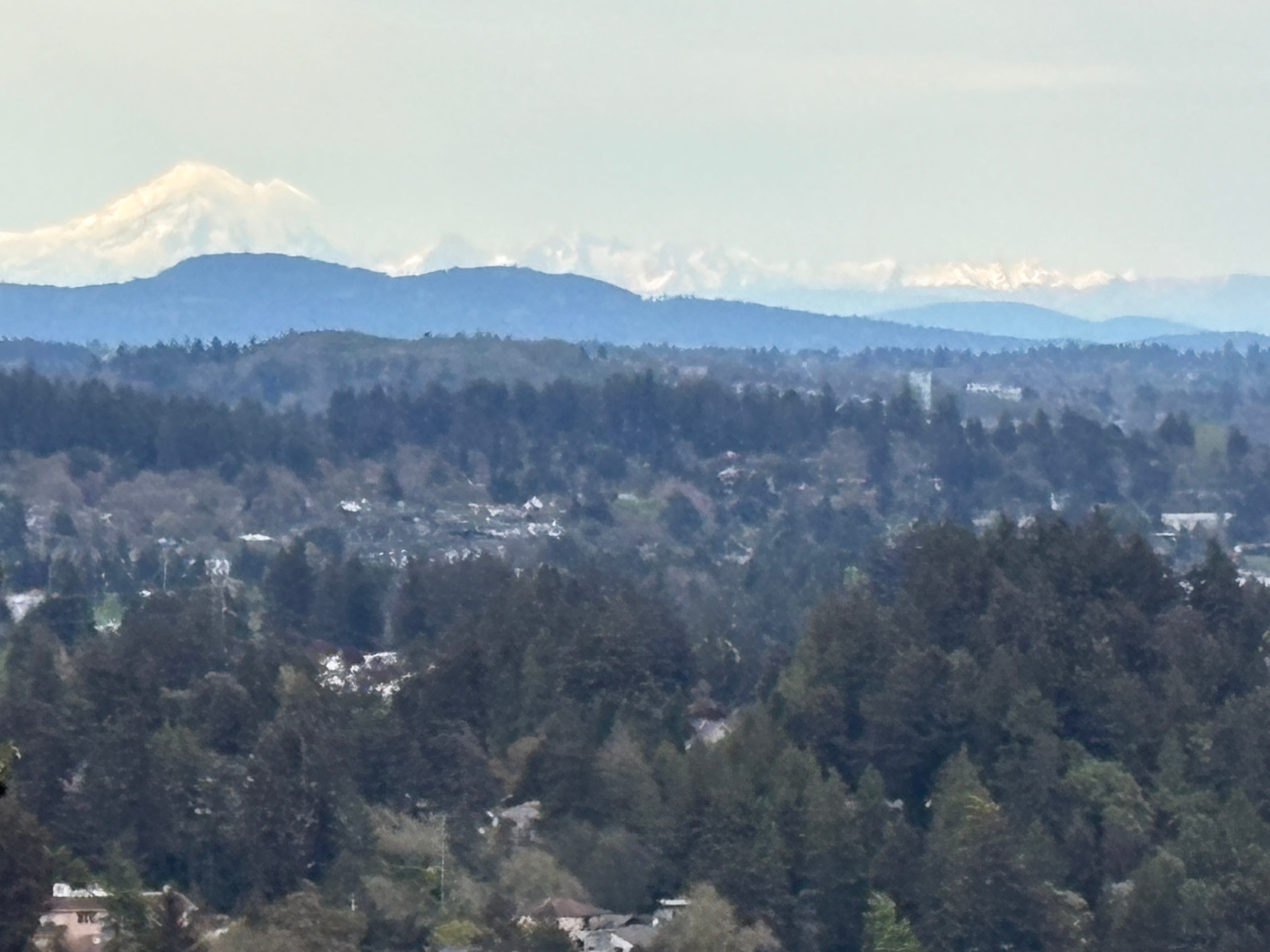
The flowers were always there.
So was the path.
Robert Frost knew something about this.
Two roads diverged in a wood, and I, I took the one less traveled by,
and that has made all the difference.
He didn’t say the road less traveled was easier. He didn’t say it was prettier or safer or more certain. Just that it made all the difference.
New paths are rarely easier than the old ones. But they go somewhere different.
And different, right now, is everything.
Thank you for sharing this experience, Kay. I love reading your musings. As we head deeper into autumn here in the southern hemisphere, I’m noticing, there is a lot falling away, creating new experiences and opportunities to bring in intention. To simplify. This time in our lives is feeling deeply sacred. With love, Amie